A boot capacity figure in litres can flatter a car that is awkward, shallow, or oddly shaped. It can also bury a square, easy-loading boot that swallows family junk with far less drama. The number tells you how much volume was measured. It does not tell you if a pram will go in without a fight, if a suitcase needs to be angled like a chess piece, or if the opening is so tight that the space looks bigger on paper than in the driveway.
That gap between brochure maths and real life is where most buyers get caught. A deep cavity with a skinny mouth can look impressive in print and still be irritating every day. A smaller boot with straight sides, a flat floor, and a sensible aperture often works better. Luggage does not care about marketing claims; it cares about shape, access, and the amount of lifting required.
Why the litre figure can lie
Boot volume is usually quoted in litres, which sounds precise until you try loading actual objects into the car. A long, narrow compartment can score well on a measurement sheet and still refuse anything wide. A sloping tailgate can shave off the upper section where tall items need to sit. High loading lips turn a simple lift into a dead weight heave. Wheel arches eat into the usable width right where you want to drop in a crate or suitcase.
Rear seats can also create false comfort. Some boots fold to a useful flat floor. Others leave a step, ridge, or dip at the join, and that little mismatch is enough to stop a long bag sliding in cleanly. The headline number still looks generous. The owner is left wrestling with an awkward hole and wondering why the car on the forecourt felt so much more sensible than the one at home.
Seven-seat SUVs are even worse at gaming the eye. Makers often quote the biggest boot figure they can find, which usually comes with the third row folded away. Buyers see a large number and assume it applies with seven people aboard. It usually does not. With every seat in use, the space behind the rearmost row can shrink to the point where you are choosing between a soft bag and a packed lunch.
The parts that quietly steal space
A parcel shelf or luggage cover changes the game more than most buyers expect. It sets a ceiling for what can sit in the boot without removing it. This means a tall cooler box, a stacked crate, or a bulky stroller may be a no-go even if the raw volume looks healthy. Remove the cover and the numbers improve. Keep it in place and the practical height is suddenly much lower.
Spare wheel packaging matters too. A full-size spare under the floor can lift the boot floor enough to clip the vertical space by several centimetres. A space-saver does the same, only slightly less brutally. Some cars use a tyre repair kit and win back a bit of room, but then you are living with a can of sealant instead of a proper wheel.
Electric and hybrid cars add their own clutter. Charging cables need somewhere to live, and if the boot lacks a proper cubby they end up taking over the floor or the underfloor area. Audio hardware can do the same. A subwoofer in the wrong place is a storage thief with a speaker grille on top.
Even an electric tailgate can be a nuisance if the real world disagrees with the showroom. In a low garage it may open too high for comfort. On the school run it may move so slowly that the convenience disappears while you wait for it to rise and descend like a reluctant lift. A feature can be technically premium and still feel slightly absurd at 7.20am.
What to test instead of reading the brochure
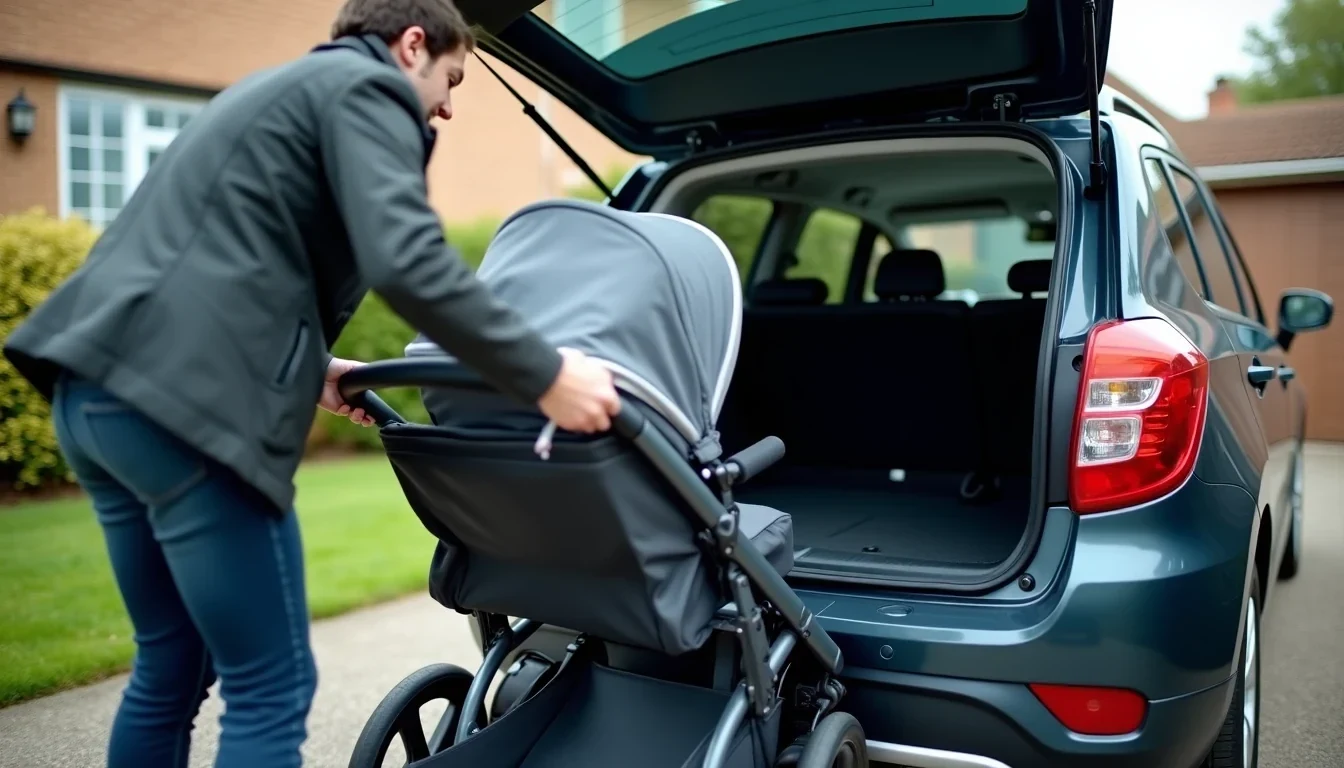
The only honest way to judge a boot is to load it with the stuff families actually carry. Start with a folded pram. That one item will expose opening width, lip height, and floor length faster than any spec sheet ever will. If the pram needs a diagonal shuffle or a two-handed twist to get past the aperture, the boot is already telling you the truth.
Next come four reusable grocery crates. They are awkward in a useful way because they test width, shape, and stackability at the same time. If two fit across the floor with room to spare, that is a good sign. If the wheel arches pinch them in, you will feel it every time you leave Woolies or Checkers with a full load.
Then try two medium suitcases. That combination is the holiday test. It shows whether the boot is really usable for a family weekend or airport run, or whether it only looks large when empty. A boot that takes two suitcases only when they are laid flat, shifted sideways, or bullied into place is not as accommodating as it pretends.
Finish with a school sports bag. By then the remaining room matters more than the headline volume. That bag is the last proof of whether the boot still has awkward corners to spare or whether every item has to be forced into position.
The measurements that matter
For a proper verdict, measure the opening width at its narrowest point. That tells you whether a pram, crate, or suitcase can actually enter the boot without damage control. Measure the loading-lip height from the ground. A low lip makes a heavy load far easier to lift, especially when one hand is already holding a child’s backpack.
Add floor length, because a boot can be wide and still fail on depth. Measure the height below the parcel shelf or luggage cover, because that is the real limit for everyday use. Then check the space with every seat occupied, not just with the back row folded. That matters most in seven-seaters, where the number in the brochure often belongs to a completely different configuration.
The litre figure is still a useful starting point. It just should not be the final word. A smaller, squarer boot with a sensible opening will usually beat a larger one that looks good in the brochure and awkward in the driveway. Families do not pack in litres. They pack in prams, crates, suitcases, and one more sports bag than you expected.