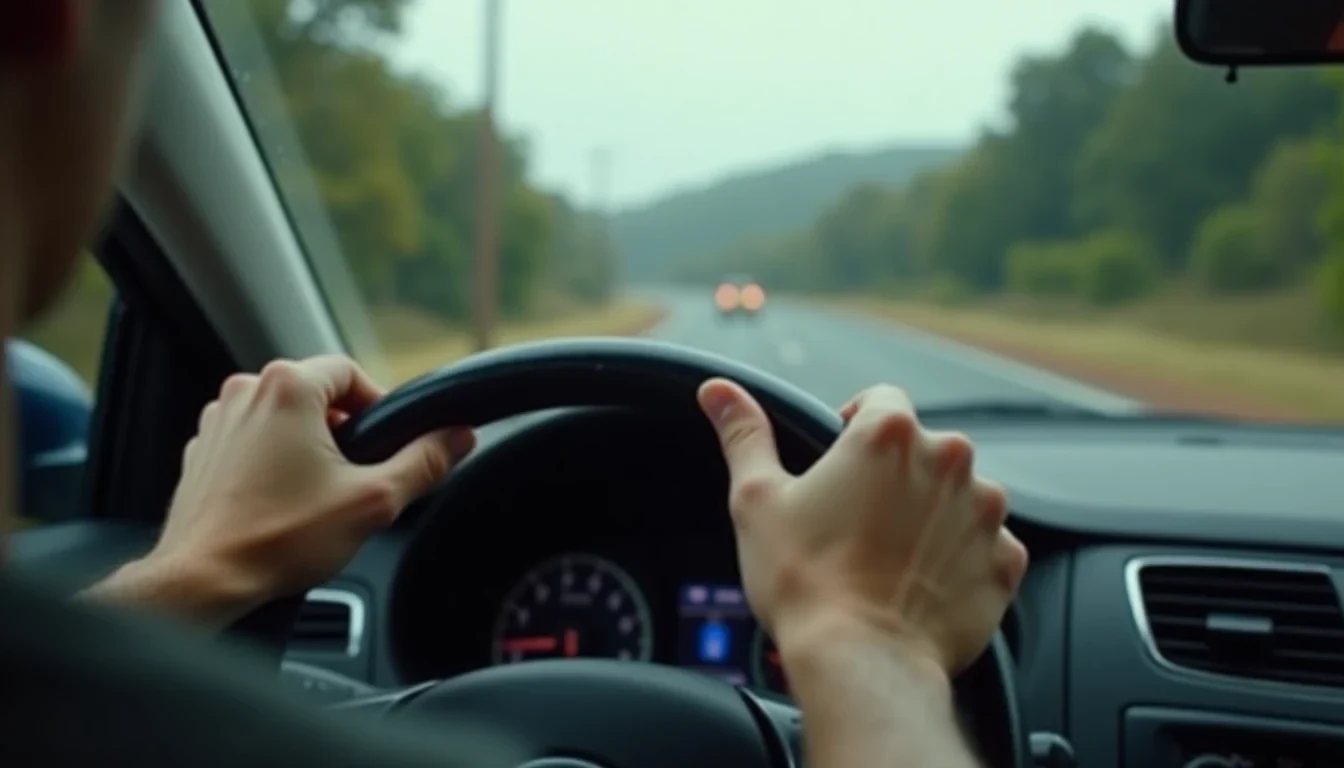
Lane Keep Assist sounds neat in a showroom but turns petty on the wrong road. In a clean brochure-world motorway lane, it can feel like a quiet safety net. On patched tar, faded paint, and half-finished roadworks, it can feel like a passenger grabbing the wheel every few seconds to complain about your driving.
This tension explains why the same system can be praised in one breath and switched off the next. The hardware has not changed; the roads have.
The road decides more than the badge
Lane Keep Assist depends on a camera reading the lane and making sense of the road ahead. Give it crisp white lines, stable markings, and a predictable stretch of freeway, and it usually behaves. Put it on older sections of the N1, a battered stretch of the N2, or a secondary route with weak shoulder lines, and it starts working harder for weaker results.
This is where the local mismatch shows up. Faded paint leaves the camera guessing. Roadworks add temporary lines, cones, and barriers that do not always align with what the software expects. Patches in the asphalt, tar snakes, and changes in surface color can appear as non-existent edges to the system. On rural R-roads such as the R512 and R44, where shoulder markings may be thin or absent, the car often has less to work with than the driver does.
A good system can still make sense of brief gaps. A bad one simply drops out or makes anxious little corrections that feel more like panic than assistance.
Three cars, one route, no excuses
To see how that plays out in the real world, we ran three vehicles over the same route with their factory settings left alone. No menu tuning, no clever workarounds, no pre-drive fiddling. The point was to measure what the car gives ordinary owners on an ordinary day.
We looked at false interventions, missed lane departures, steering force, warning volume, how many steps it takes to change the setting, and whether the system remembers the last choice after a restart. The question was never how many safety acronyms the spec sheet could stack up. It was whether the feature lowers workload in dense traffic and on longer runs, or whether the driver ends up treating it as another thing to manage.
The answer varied more than the marketing would like.
Car one felt polite until it did not
The first car was the easiest to live with on open highway. Its lane support leaned on the wheel with restraint, more nudge than shove, and the warnings were calm enough not to punch holes in your concentration. On a well-marked freeway, it behaved like a sensible back-up.
The problem came when the road stopped being tidy. On broken lane paint and through a set of roadworks, the system began chiming when it did not need to and hesitating when it should have helped. It never quite became hostile, but it did become annoying. Annoyance is how drivers start mentally filing a feature under “off by default.”
Car two had no sense of proportion
The second car was the opposite. It objected to lane position rather than merely reminding the driver. Steering effort ramped up to the point where a simple drift correction could feel like a small argument. If you have ever tried to settle a car into a merge lane while the steering wheel tugs back at you, you know the sensation. It is resistance, not reassurance.
This car was also the quickest to overreact. Wide bends, merging lanes, and painted transitions near roadworks triggered false prompts more often than they should have. On one section with patched tar and uneven lines, it behaved as if it had found a crisis. The driver knew better; the system did not.
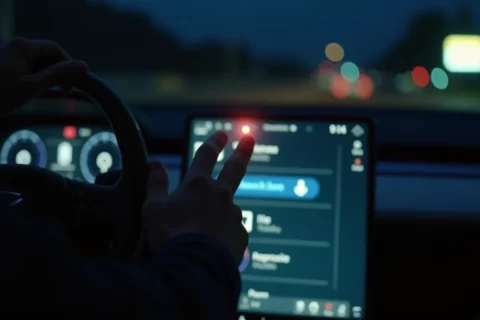
It also defaulted back on after each restart, which is where patience starts to evaporate. If you need to dig through touchscreen menus every time you leave home, the feature stops being safety tech and becomes a pre-drive chore.
Car three got the balance closest to right
The third vehicle was the most convincing because it understood restraint. Its lane support was not invisible, but it was not bossy either. The steering wheel gave a gentle warning when needed, and the car did not feel as though it was trying to outvote the driver.
It still struggled where all camera-based systems struggle. Faded lines and broken shoulders made it less decisive, and it was not immune to false readings where the surface changed abruptly. But it recovered better than the others and, crucially, did not turn every correction into a tug-of-war.
The controls helped too. A dedicated physical button on the steering wheel made it far easier to deal with than a buried touchscreen menu. That sounds minor until you have to use the car every day. Then it becomes the difference between a feature you tolerate and one you actually use.
The reset problem irritates drivers most
The deepest frustration with lane support is not the warnings themselves. It is the persistence of the setting. If a system comes back on at every ignition cycle, it assumes the driver wants the same help every time. Many do not. Some want it off on local roads and only on for long freeway runs. Some want a softer setting. Some want nothing between them and the steering rack.
The cars that remember the last choice earn instant goodwill. The ones that reset to on force a ritual, and rituals are where owner resentment starts. Once a driver has to touch the screen before every trip, the feature becomes part of the nuisance list.
Euro NCAP’s 2026 lane-support testing gets this part right. Smoothness and clarity matter. A system that is technically active but awkward, intrusive, or unpredictable is not a win just because it exists.
Safety aid or expensive irritant
On a clean run up the N1, Lane Keep Assist can reduce fatigue. It catches the brief lapses that happen in stop-start traffic or after too many kilometers behind the wheel. That part of the argument is real.
The local picture is harsher than the brochures admit. Faded markings, patchwork roads, roadworks, and broken shoulders turn a simple lane aid into a constant negotiation. If the car keeps reacting too hard, reacting too late, or reacting for no good reason, the driver stops trusting it. Once trust is gone, the feature becomes dead weight.
Lane Keep Assist is only useful when it respects the road and the driver. On South African roads, too many systems still behave as if the lane markings are always fresh, the shoulders always clear, and the owner always wants a touchscreen detour before pulling away.