
A petrolhead can still enjoy a good argument about horsepower, but electric cars have changed the terms. The numbers now live in kilowatts and kilowatt-hours, and once you get used to that language, the whole EV conversation becomes less mystical and more honest. A compact electric hatch might make 100 to 150 kW. A serious dual-motor performance EV can climb past 300 kW and keep going. For buyers trying to judge an EV properly, that is a cleaner way to read the spec sheet than squinting at badge fantasy and cylinder count.
The catch is that the badge on the tailgate often tells you far less than the parts under the floor. In many global EVs, the heart of the car comes from China, even when the shell wears a German, American, or Swedish badge. Batteries, motors, controllers, and the software that binds them together are increasingly built by a handful of specialised Chinese firms that the rest of the industry quietly depends on.
The new language of EVs
If you are used to engine size, torque curves, and V6 or V8 bragging rights, EV specs can feel oddly flat at first. They should not. Kilowatts are simply a more direct way of talking about power. One kilowatt is about 1.34 horsepower, so the conversion is easy enough when you want a familiar comparison.
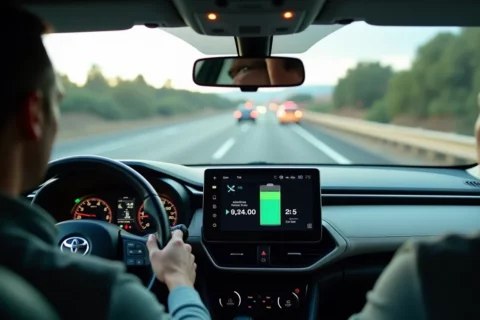
Battery size is the other number that matters. City-focused EVs usually sit around 40 to 50 kWh, which is enough for short commutes and school runs if you are not trying to do a Gauteng-to-Bloemfontein slog every week. Bigger SUVs and long-range cruisers often carry 80 to 100 kWh or more. Efficiency then becomes the real test. A decent EV can return around 6 to 7 km per kWh, which is the figure you should keep in your head when you are thinking about range instead of brochure claims.
Charging is where road-trip reality bites. A car that tops out at 50 kW on DC fast charging is fine for local use, but on a long drive it starts behaving like a coffee break machine with wheels. A car that can pull 150 kW, 250 kW, or even 350 kW is a different animal entirely. That is the difference between a useful stop and a long argument with a charging bay while the kids ask if you are nearly done.
The Chinese parts you do not see
CATL is the biggest battery maker on the planet, and its cells show up in cars linked to Tesla, BMW, and Volkswagen. It works across both nickel manganese cobalt packs and lithium iron phosphate cells, which matter because the chemistry changes how the car charges, lasts, and handles heat.
BYD started in 1995 making cellphone batteries. That history is doing a lot of work now. It developed the Blade Battery, a long, flat pack that has earned a reputation for shrugging off abuse that would turn other cells into a bad day. BYD also builds its own high-spec motors and runs an e-Platform that uses silicon carbide power chips and very high RPM motors. That is not a side hustle. That is the core business.
Gotion High-Tech has Volkswagen backing, CALB Group builds batteries for commercial and passenger fleets, and Huawei’s DriveONE systems are used by brands such as Avatr and Seres. Those 800V motors can reportedly take a battery from 10 percent to 80 percent in under 15 minutes, which is the sort of figure that makes conventional fuel stops look positively medieval. Inovance Automotive supplies controllers and full drivetrains around the world, while Leapmotor builds its own motor, powertrain, and software in-house so it can sell cars cheaper without bleeding money on every unit.
Why your EV is harder to tinker with than a dirt bike
Electric dirt bikes are a different species. Surron and Talaria use in-house motors but lean heavily on QS Motor for the stators and rotors that matter most. The aftermarket around them is active because the bikes are still mechanically simple enough for owners to treat them like grown-up toys with a wiring loom.
The Stark Varg goes its own way with a custom 360V liquid-cooled motor, a carbon-fibre sleeve, up to 80 horsepower, and a claimed weight of just 9 kg. EBMX sells the XLB-60 and XTA-60 Core, with the XLB-60 RACE edition able to spin to 13,000 RPM and survive ugly motocross heat. Torp’s TM40 Pro pushes 50 kW peak output, which is about 67 horsepower. Sotion’s FW01 Pro is the friendlier sort of upgrade, a plug-and-play IPM motor that raises output to 32 kW without forcing you into a frame rebuild.
Full-size EVs are not built that way. A 500 kW Tesla Plaid motor is small enough to seem almost rude, the sort of thing you can imagine carrying in a suitcase. The problem is everything around it. A cheap car’s chassis, suspension, and driveshafts were never designed for that kind of torque. Give a car built for about 100 horsepower six times the twist it expected and something will surrender. Usually several things do.
Battery packs make the situation worse. High-end EV packs can run at 800V, weigh 500 to 700 kg, and need liquid cooling, radiators, and pumps just to stay alive. A bargain-basement EV rarely has the space, structure, or thermal hardware to accept that kind of transplant.
Then there is the software lock. Modern EVs are not just bundles of parts. They are digital marriages. Battery, motor, inverter, and dashboard have to recognise one another or the car may refuse to wake up at all. With DRM and encrypted CAN-bus networks in the mix, a random swap is not a Saturday project. It is a brick-shaped mistake.
Where the real fun still is
That is why the serious builders do not start with a modern EV. They start with a light classic, usually something like a BMW E30, a Porsche 911, or an old Ford truck, strip out the original wiring and electronics, and build around an aftermarket EV motor and custom battery cells. The result is a cyber-rod, a proper electric restomod with a blanker brain and fewer corporate handcuffs.
That route makes more sense than trying to outsmart a locked-down production EV. You get the power you want, the chassis you can reinforce, and the freedom to choose the control hardware instead of begging a factory computer for permission. In EV terms, that is the real hot rod game now. The showroom car is sealed. The classic shell is open for business.
If you want, I can next break down how those custom EV conversion kits actually work, or pull apart the hardware lockout tricks Tesla and other makers use to keep owners from tampering with the drivetrain.