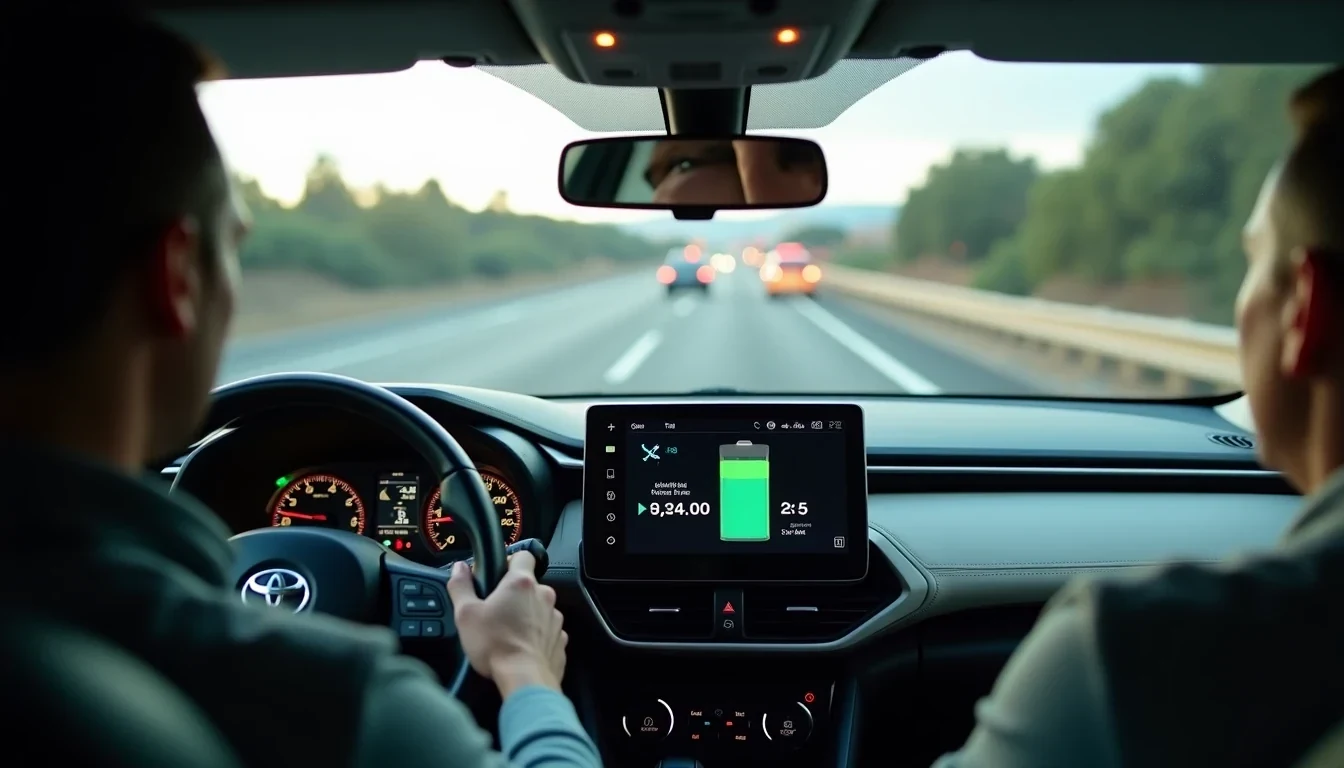
A hybrid can feel like a magician in Johannesburg traffic and a very ordinary petrol car once the road opens up. The same Corolla Cross Hybrid that sips fuel through stop-start gridlock will drink much more honestly when it settles at 120 km/h and stops getting free energy from your right foot.
Brochure numbers never really explain this. The quoted average is real, but so are factors like your route, the outside temperature, the battery’s starting state, and whether the trip computer has been living off someone else’s gentle commute before you climbed in. A hybrid is economical in the right place. The argument starts when buyers assume that place is everywhere.
Where hybrids earn their keep
A conventional hybrid is built to win in traffic. Slow speed, regular braking, and short bursts of acceleration suit the system perfectly. The petrol engine can switch off more often, the electric motor does the grunt work at lower speeds, and regenerative braking turns wasted motion back into charge.
In city use, that can make a serious difference. Toyota quotes 4.3 litres per 100 km for the Corolla Cross Hybrid. In the sort of urban run where a hybrid is happiest, figures in the 3.5 to 4.5 L/100 km range are entirely believable. Keep the pace gentle, stay below the speed where the engine has to carry the whole load, and the hybrid starts doing what it was bought to do.
That sweet spot is usually below 60 km/h, with the electric side contributing in short spells rather than for long distances. Once speeds climb, the petrol engine becomes the main source of propulsion. The battery still helps, but it is no longer the star of the show. On a flat commute with plenty of braking points, the car has chances to recover energy all the time. On a long open road, those chances mostly disappear.
Why the highway changes the story
A steady highway run is where a lot of hybrid optimism gets bullied into realism. Hold 120 km/h for long enough and the system stops harvesting much energy, because there is little braking and no meaningful stop-start work to do. The engine runs almost continuously, and the electric motor fades into a supporting role.
A Corolla Cross Hybrid can move from brochure-friendly numbers to something nearer 6.0 to 7.5 litres per 100 km on a sustained motorway cruise. The gap to an efficient petrol or diesel car narrows fast. For a driver whose life is mostly N1, N3 or long national-road slogs, the premium paid for the hybrid badge may never be recovered in fuel saved.
Terrain makes it worse. Long climbs, heavy loads, and towing all force the engine to work harder for longer. Cold weather does the same in its own way, because the system spends more time warming itself up before it settles down. A mild, flat commute with traffic lights every few minutes is one thing. A loaded run up to Limpopo or a winter dawn departure out of the Cape Winelands is another.
The mixed-owner fantasy is easy to sell. The actual maths is more stubborn. If your week is mostly freeway, the hybrid advantage shrinks to almost nothing.
The test that tells the truth
Short drives flatter or punish hybrids in ways that make the dashboard reading close to useless. One journalist may have left the trip computer full of careful eco-driving from the previous route. Another may have arrived with a battery already charged from downhill running. Temperature, elevation, and traffic can swing the result before you have even settled into the seat.
If you want a number that means something, the method has to be boring and controlled. Reset the trip computer. Set the tyre pressures correctly. Use a recorded route. Give each test enough distance that one cold start does not dominate the average.
The cleanest approach is to compare three separate runs in the same car. First, an urban commute. Second, a motorway run held at 120 km/h. Third, a mixed family week that includes school runs, errands, and some open-road driving. Record fuel consumption, average speed, distance travelled on electric power, and the gap between the dashboard reading and the fuel you actually add back in.
Tank-to-tank measurement is the best backstop. Fill the car carefully to the first click, note the odometer, drive a proper distance, then refill the same way and calculate consumption from fuel used versus distance covered. It is tedious, but it is honest. Anything shorter than roughly 100 km per scenario starts to get noisy, especially once a cold start is in the mix.
Who should buy one
The hybrid case is strongest for the driver who lives in traffic. Peak-hour commuting in places like Johannesburg, Cape Town, or Durban gives the system exactly what it wants: braking, coasting, crawling, and enough low-speed running for the electric motor to matter. If your week looks like that, a hybrid can deliver the fuel savings that justify its price.
The case is weaker for the long-distance driver. If your regular routine is more Johannesburg to Durban than school run to Sandton, the fuel picture becomes much less flattering. You still get the smoothness and the novelty of the system working in the background, but the savings may not be big enough to offset the extra purchase price.
That is the real question buyers should ask. Not whether a hybrid is efficient in the abstract, because that is easy. The question is whether your own roads let it work. A Corolla Cross Hybrid stuck in heavy city traffic can look brilliantly frugal. The same car, held at a steady 120 km/h with the engine carrying the load for hours, starts to look like a sensible petrol car wearing expensive furniture.
The number that matters
Hybrids are not fake. Their fuel saving is just route-dependent in a way most buyers underestimate.
If your driving is urban, stop-start, and gentle, the savings are real and repeated. If your life is long, steady highway runs, the hybrid premium can buy you very little in return. The car is still the same car. The road decides whether it is a smart buy or an expensive promise.