The old habit of starting a car and letting it sit there “to warm up” belongs to a different era, one built around carburettors, thick oils, and engines that needed a moment to settle before they could be trusted. Modern petrol and diesel engines want oil pressure, then movement.
Leave one idling for half a minute if you like. Any longer wastes fuel while the engine warms unevenly, the drivetrain stays cold, and a diesel’s exhaust sits far below the temperature needed to clean itself properly.
Why idling does the wrong kind of warming
A cold engine needs lubrication first. People get this part right when they sit and wait after startup. Oil has to circulate, pressure has to stabilise, and the top end, bearings and other moving parts need a few seconds before load arrives.
After that, idling starts working against you. The engine turns, but it does not do useful work. Combustion stays relatively cool, fuel burns less completely, and the cylinder walls remain cold enough for unburnt fuel to condense where it should not. That strips away some of the oil film protecting the metal surfaces.
Wear creeps in. Piston rings, cylinder liners and bearings all pay for a warm-up routine that lasts too long. The engine may feel calm and mechanical from the driver’s seat, but inside it spends extra time in a compromise state, neither cold enough to shut down nor hot enough to work properly.
Fuel consumption also takes a beating. A car sitting on the driveway can burn through roughly 0.5 to 1 litre an hour while going nowhere. That is a spectacularly inefficient way to build operating temperature.
The drivetrain is part of the story
A modern car is an entire system, not just an engine. The transmission, differential, wheel bearings and all the fluids that keep them alive need warmth too. Idling barely helps them.
Put the car in gear and drive gently, and the whole machine starts heating as a system. Transmission fluid starts circulating properly. Differential oil thins out. Bearings and shafts see the sort of motion they were designed for. The engine warms faster under light load, and the rest of the car comes along with it instead of being left out in the cold.
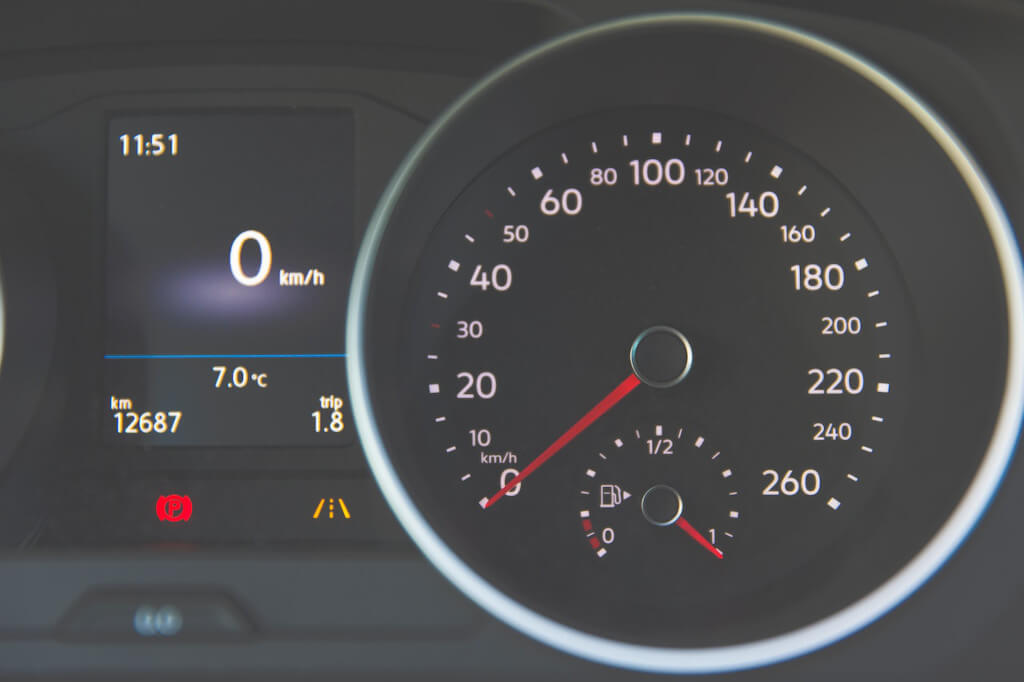
The quickest, safest warm-up is simple. Start the car. Wait 15 to 30 seconds. Pull away gently. For the first 5 to 10 minutes, keep revs low and avoid hard throttle until the temperature gauge has moved off the cold mark.
On a frosty morning or a short urban run, this matters more than people admit. Gentle driving is not abuse. It is the proper way to bring a modern car up to temperature without making the engine sit around and stew.
Diesels take the punishment harder
Petrol engines dislike long idles. Diesels can be punished by them.
The reason is exhaust heat. A diesel that is left to idle for long stretches stays too cool to burn off soot in the Diesel Particulate Filter. That filter traps fine particles, but it has to regenerate from time to time, and regeneration depends on high exhaust temperatures. Idle long enough and those temperatures never arrive.
Once soot starts building up, trouble follows. Power drops. Fuel use rises. Warning lights appear. In bad cases the car falls into limp mode and leaves you with a repair bill that can become ugly very quickly. In South Africa, a DPF replacement can run from about R30,000 to R50,000 for the part alone, which is a brutal penalty for a habit as old as hand-cranking nostalgia.
Diesels are also thermally efficient, which sounds like a compliment until you remember what it means on a cold start. They hold onto heat less readily than people think, and they need real driving to get the whole system hot enough to work cleanly. Sitting still does not do the job.
Petrol engines are not off the hook
It is easy to think the diesel warning is the only serious one. Petrol engines suffer their own version of the same bad routine.
Cold idling encourages incomplete combustion. That means carbon builds up where it should not, including valves, injectors and spark plugs. The catalytic converter also stays below its proper operating temperature for longer, so emissions control is delayed while the engine burns fuel for no useful distance at all.
The broader problem is the same across both fuel types. Modern engines are built to come alive under light load. They are not happiest when left to chug in place waiting for some imaginary safe moment. The safe moment is after the brief oil-pressure pause, once the car is rolling gently.
How to drive the warm-up properly
The correct routine is boring, which is part of why it works.
Start the car and count to 15 or 30. That is long enough for oil to circulate and pressure to build. Then drive off smoothly. Keep the first few kilometres easy. Use light throttle. Hold revs down. Let the gearbox, engine oil and final drive warm together instead of trying to warm one piece in isolation.
If the road is empty and the engine feels reluctant, resist the urge to stamp on the throttle just because the cabin heat has not arrived yet. Cabin warmth is not the measuring stick. The temperature gauge and the car’s behaviour are.
By the time the gauge moves off cold and the drivetrain has had a few minutes under load, the car is in a much better state than it would be after sitting still and idling itself into a false sense of readiness.
The habit worth dropping
The warm-up myth survives because it feels careful. In reality, it is a lazy holdover that makes more sense for old machinery than for the cars most people drive now.
A brief idle, then gentle driving, is easier on the engine, kinder to the drivetrain, better for fuel use and far less likely to create diesel filter drama later on. The car does not need a long wake-up call. It needs motion, after a short pause to get the oil moving.