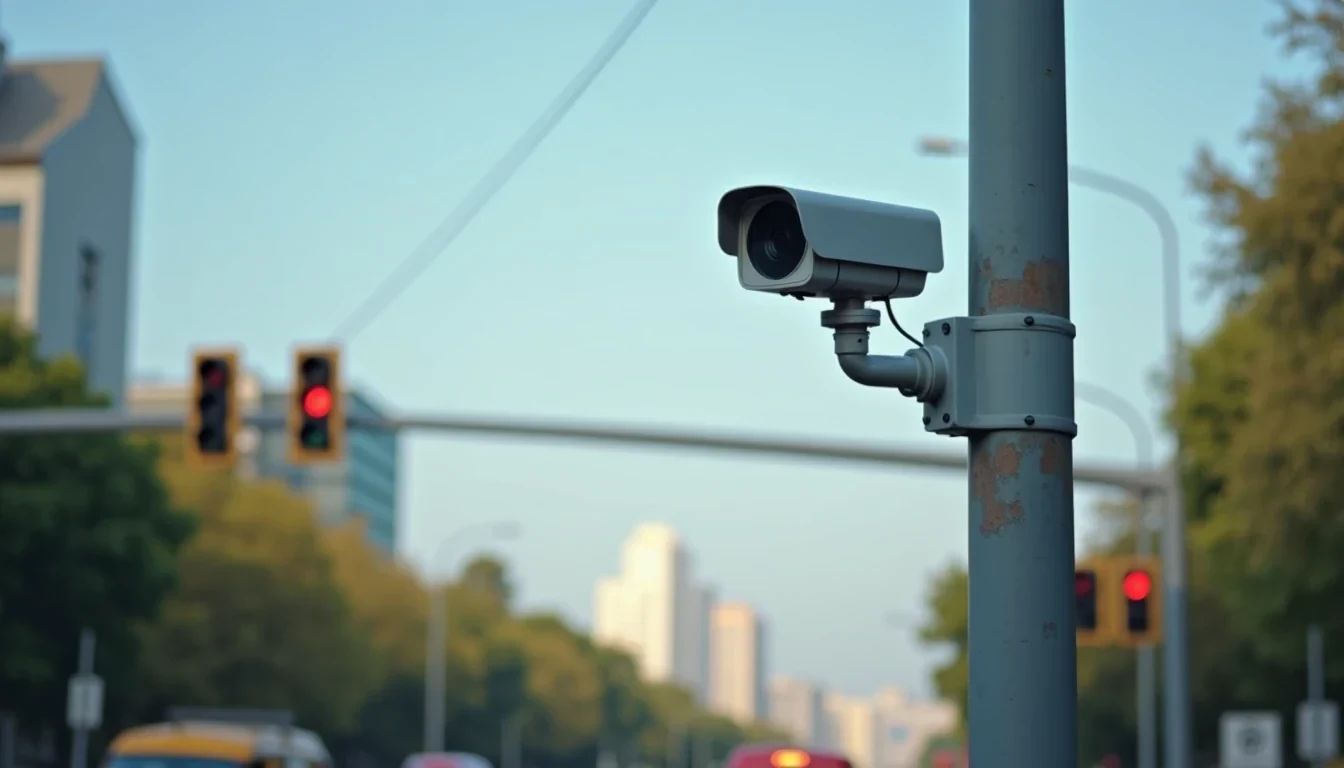
Anyone who has sat at a dead four-way in peak traffic knows the mood fast enough. Horns start, gaps disappear, and a junction that should be moving cars becomes a slow argument over right of way. Gauteng is trying to stop that from becoming the province’s default setting by putting AI-powered CCTV cameras on some of its busiest intersections, with traffic light vandalism squarely in the crosshairs.
The move is part of a broader push by the Gauteng Department of Roads and Transport to restore critical intersections across the road network. The department says too many lights have been vandalised or stripped for copper. The new cameras are meant to help monitor, identify, and arrest the people doing the damage. The point is blunt: fewer outages, smoother traffic flow, and safer roads, with key junctions kept open instead of left to improvise.
The new hardware is doing more than watching
The cameras are not being bolted on as a cosmetic extra. Gauteng’s restoration plan also includes strengthened controller boxes, underground chambers, secure bollards around poles, and CCTV units with built-in intelligent analytics. This combination tells you the department has stopped pretending this is only a maintenance issue. It is building for a world where thieves and vandals keep coming back.
The language from the department is clear enough. The restoration and maintenance programme is a long-running effort to fold newer technology into the fight against cable theft and infrastructure vandalism. That matters because the usual cycle is painfully familiar: a light goes out, crews patch it, the cables get stolen again, and the same intersection sits dark for another week or month. Hardening the system, not just repairing it, is the only way this stops becoming a permanent bill.
The department also says these works are critical to restoring safety and mobility at major junctions around Gauteng. That is the right frame. A working signal is not a small convenience. It is the difference between a clean commute and a mess of stops, near-misses, and lane changes that nobody planned for.
Where the repairs are going first
Repair work has already started and will keep moving through the Greater Johannesburg region. The list is not short or obscure. Cedar Road and Fourways, R59 and Swartkoppies South, Winnie Mandela Drive and Kingfisher, Kliprivier and JG Strydom, Christiaan de Wet and Hendrik Potgieter Road, Christiaan de Wet and John Vorster, Christiaan de Wet and Paul Kruger/Scott Avenue, Hendrik Potgieter and Doreen/Peter Roads, Hendrik Potgieter and Falls, Hendrik Potgieter and Handicap Road, Hendrik Potgieter and Jim Fouche Road, and Hendrik Potgieter and Nic Diederichs Boulevard are all in the mix.
Ekurhuleni is also on the list. Along the R23, work is planned at the N12, Bessie Hein, Mall@Carnival, Viking, and Elsburg. Those are not side-street problem spots. They are routes that move large volumes of daily traffic, which is exactly why they keep drawing attention from vandals and thieves in the first place.
Joburg’s traffic light network is already in trouble
Johannesburg’s own road signal network is deteriorating fast enough to make the province’s intervention look overdue rather than ambitious. The Johannesburg Roads Agency said in 2025 that the city needed R70 million just to deal with the long list of stolen and broken traffic lights.
Sipho Nhlapo, the acting head of mobility and freight at the JRA, said about 396 traffic lights across the city had been vandalised. Some still functioned in part. Others had been stripped back to almost nothing. His description sounded like an engineer staring at a vandalised site rather than a press release. In some places, he said, there is no pole, no cable, and nothing left to repair without starting again from scratch.
The age of the system is part of the problem. Nhlapo said many Joburg CBD intersections were built with a weak paper insulation setup. Heavy rain exposed that weakness, and later fibre cable installations made the road surface even more vulnerable. The result is a network that keeps getting hit from more than one side.
His estimate was grim. As many as 488 traffic lights were not working at any given point, and that rises to nearly 600 if you count the lights that are technically functioning but still vandalised. He also said roughly 25% of the metro’s intersections are out of action at any time because of power problems.
Power failures keep making the job harder
That power issue has become part of the story, not an aside. Since last year, the JRA has said many of the repeat failures have been power-related. In practical terms, that means a city can spend money on repairs and still lose the same intersections to load-related faults or supply interruptions.
The agency has also said Eskom provides power in many cases, and the Gauteng Department of Transport is in communication with Eskom as those issues crop up. That does not solve the vandalism problem. It does show why the province is leaning on a mix of surveillance, physical protection, and repairs. A signal network can fail because somebody stole the cable, because the box was smashed, or because the power vanished. Often, it is all three over time.
The public has a job here too
Gauteng MEC for Roads and Transport Kedibone Diale-Tlabela has asked motorists, bikers, pedestrians, and runners to help protect road infrastructure. Her message was direct: if you see suspicious activity, theft, or vandalism, report it to the authorities.
That appeal is not empty ceremony. The department can put cameras on the mast and bollards around the base. A province with hundreds of dead or damaged lights will still need eyes on the street. The cameras may catch the vandals. The public can help make sure they do not get a clean run at the next intersection.